- Home
- About Sadaf
- Our Services
- Therapies Offered
- Cognitive Behavioural Therapy (CBT)
- Emotionally Focused Therapy (EFT)
- Trauma-Informed Therapy
- Mindfulness-Based Therapy
- Acceptance & Commitment Therapy (ACT)
- Internal Family Systems (IFS) Therapy
- Person Centred Therapy
- Psychodynamic Therapy
- Solution-Focused Therapy
- Dialectical Behaviour Therapy (DBT)
- Psychoeducation
- Areas of Support
- Rates

- Home
- About Sadaf
- Our Services
- Therapies Offered
- Cognitive Behavioural Therapy (CBT)
- Emotionally Focused Therapy (EFT)
- Trauma-Informed Therapy
- Mindfulness-Based Therapy
- Acceptance & Commitment Therapy (ACT)
- Internal Family Systems (IFS) Therapy
- Person Centred Therapy
- Psychodynamic Therapy
- Solution-Focused Therapy
- Dialectical Behaviour Therapy (DBT)
- Psychoeducation
- Areas of Support
- Rates
- Home
- About Sadaf
- Our Services
- Therapies Offered
- Cognitive Behavioural Therapy (CBT)
- Emotionally Focused Therapy (EFT)
- Trauma-Informed Therapy
- Mindfulness-Based Therapy
- Acceptance & Commitment Therapy (ACT)
- Internal Family Systems (IFS) Therapy
- Person Centred Therapy
- Psychodynamic Therapy
- Solution-Focused Therapy
- Dialectical Behaviour Therapy (DBT)
- Psychoeducation
- Areas of Support
- Rates
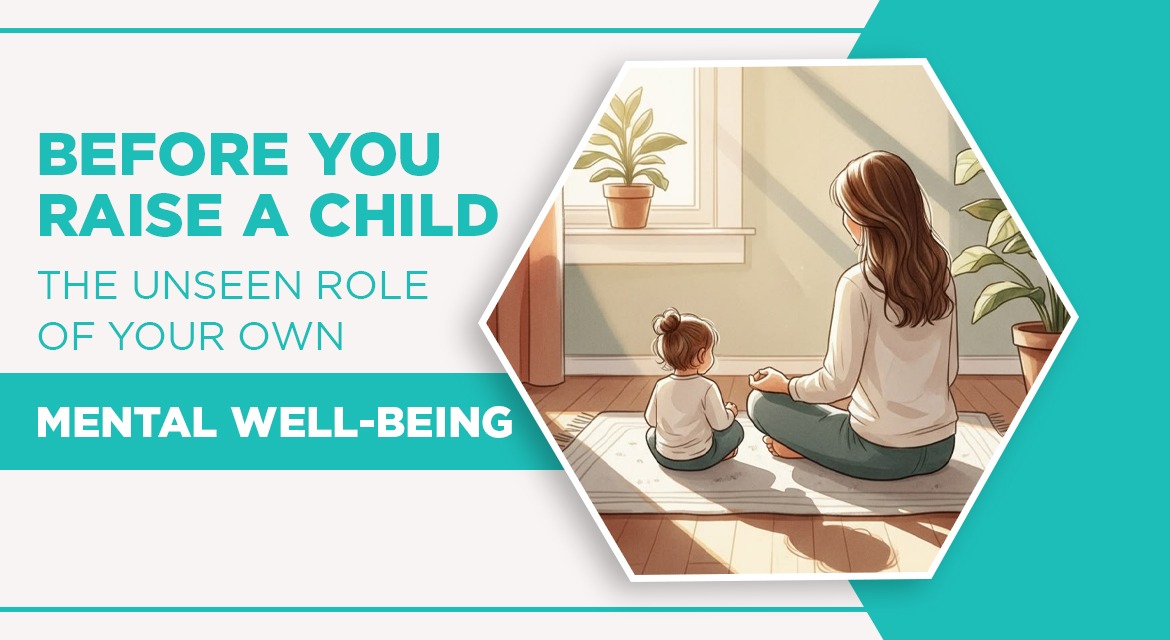
Before You Raise a Child: The Unseen Role of Your Own Mental Well-Being
In many cultures, the image of the “self-sacrificing” parent is deeply admired. We often praise caregivers who devote their energy, time, and emotional capacity entirely to their children, sometimes at the expense of their own well-being. Parental exhaustion is often normalized, even revered as a sign of love and commitment. Yet while dedication is admirable, we must also respectfully question the belief that exhaustion is the measure of good parenting.
At Horizon Healing Psychotherapy, we see the reality behind this myth. When parents neglect their own mental health, they carry what is called The Invisible Weight. The parent does not just feel this weight; it is felt by the child, echoed in the home’s atmosphere, and reflected in the family’s daily interactions. To put it simply: the most profound gift you can give your child is a healthy, regulated version of yourself.
The Science of Co-Regulation
To understand why your mental health is the foundation of your parenting, we have to look at co-regulation. Children, especially young ones, do not possess a fully developed nervous system. They lack the biological hardware to calm themselves down from high states of distress. Instead, they “borrow” the nervous system of their caregiver to find balance. This is a biological imperative.
If a parent is chronically stressed, anxious, or depressed, their nervous system is in a state of “dysregulation.” When a child comes to a dysregulated parent with their own Big Feelings, there is no calm harbor for them to land in. Instead of the parent helping the child calm down, the child’s distress often heightens the parent’s stress, leading to a cycle of reactivity, shouting, or emotional withdrawal.
When you prioritize your mental health, you are essentially upgrading the hardware your child relies on. You become a steady anchor, allowing them to learn how to navigate their own emotions by watching and feeling your calm.
How “The Invisible Weight” Affects the Family
When a parent is struggling physically and mentally, it manifests in ways that directly impact child development and behaviours:
- Reduced Emotional Attunement: When parents’ minds are clouded by their own heavy thoughts, they often miss the subtle cues their children give them. They might overlook a “bid for connection” or misinterpret a child’s cry for help as mere “attention-seeking.”
- Increased Reactivity: A parent carrying an invisible weight has a “short fuse.” Minor spills or typical childhood defiance feel like personal attacks, leading to over-corrections and a home environment governed by walking on eggshells.
- The Guilt Gap: Mental health struggles often bring a sense of shame. Parents feel guilty for not being “happy enough,” which leads to overcompensating or withdrawing further. Both of these reactions can leave a child feeling confused or insecure.
- Modelling “Burnout Culture”: Children learn how to treat themselves by watching how we treat ourselves. If they see us constantly stressed and neglecting our needs, they learn that self-neglect is the standard for adulthood.
Breaking the Cycle: Healing the Parent to Help the Child
Caring for your mental health is not a luxury; it is a foundational requirement for healthy, sustainable parenting. When a parent’s emotional well-being is supported, the entire family system benefits. Our structured therapeutic module is designed to gently ease that often invisible emotional weight, while helping you build a healthier model of parenting, one in which a parent’s mental health is not secondary, but central.
Radical Self-Compassion
The first step is shedding the shame. Parenting is objectively hard, and parenting while struggling with anxiety, depression, or trauma is an immense challenge. Acknowledge that your struggles do not make you a “bad parent.” They make you a human parent in need of support.
Identifying Your Triggers
Therapy helps parents identify which childhood behaviours trigger their own emotional wounds. Perhaps a child’s “talking back” triggers a memory of being silenced as a child. When you understand your triggers, you can pause before reacting, creating space for a more intentional response.
Establishing Personal Boundaries
You cannot pour from an empty cup. This means setting boundaries not just with your children, but with work, extended family, and your own expectations. It is okay to say, “Mommy needs ten minutes of quiet time so I can be a better listener when I come back.”
Professional Support
Sometimes, the weight is too heavy to lift alone. Therapy for parents provides a dedicated space to process your own history, manage current stressors, and learn regulation techniques. In my work at Horizon Healing Psychotherapy, I often find that as the parents’ mental health improves, the challenging behaviours of the child begin to soften naturally.
The “Oxygen Mask” Reframe
If you find it difficult to prioritize yourself for your own sake, do it for their sake. Think of your mental health as the environment your child grows in. Just as we ensure our children have clean air, nutritious food, and safe shelter, we must ensure they have a stable emotional climate. When you go to therapy, practice mindfulness, or take time for self-care, you are directly investing in your child’s resilience.
A Note from Horizon Healing Psychotherapy
If you feel like you are drowning in the demands of parenthood, or if you feel a persistent invisible weight that makes it hard to be the parent you want to be, please know that support is available.
You do not have to wait for a crisis to seek help. Therapy is a proactive way to strengthen your family’s foundation. By healing yourself, you are stopping generational cycles of stress and giving your child the greatest gift possible: a parent who is present, regulated, and whole.
At Horizon Healing, we specialize in supporting parents through the complexities of the caregiving journey. We provide a non-judgmental space to help you lift the weight and find your way back to a joyful, connected relationship with your family.
To schedule a free 15-minute consultation call to discuss how we can support your parenting journey, contact us today.
- Psychotherapy sessions are virtual( meet from the comfort of your home)
- Timings: 10 am-3:30 pm. Evenings are available from 6pm to 10pm with a time/day consultation.
- some weekends available on request.


Useful Links
NewsLetter
Feel Free to reach out if you want to collaborate with us, or simply have a chat.

