- Home
- About Sadaf
- Our Services
- Therapies Offered
- Cognitive Behavioural Therapy (CBT)
- Emotionally Focused Therapy (EFT)
- Trauma-Informed Therapy
- Mindfulness-Based Therapy
- Acceptance & Commitment Therapy (ACT)
- Internal Family Systems (IFS) Therapy
- Person Centred Therapy
- Psychodynamic Therapy
- Solution-Focused Therapy
- Dialectical Behaviour Therapy (DBT)
- Psychoeducation
- Areas of Support
- Rates

- Home
- About Sadaf
- Our Services
- Therapies Offered
- Cognitive Behavioural Therapy (CBT)
- Emotionally Focused Therapy (EFT)
- Trauma-Informed Therapy
- Mindfulness-Based Therapy
- Acceptance & Commitment Therapy (ACT)
- Internal Family Systems (IFS) Therapy
- Person Centred Therapy
- Psychodynamic Therapy
- Solution-Focused Therapy
- Dialectical Behaviour Therapy (DBT)
- Psychoeducation
- Areas of Support
- Rates
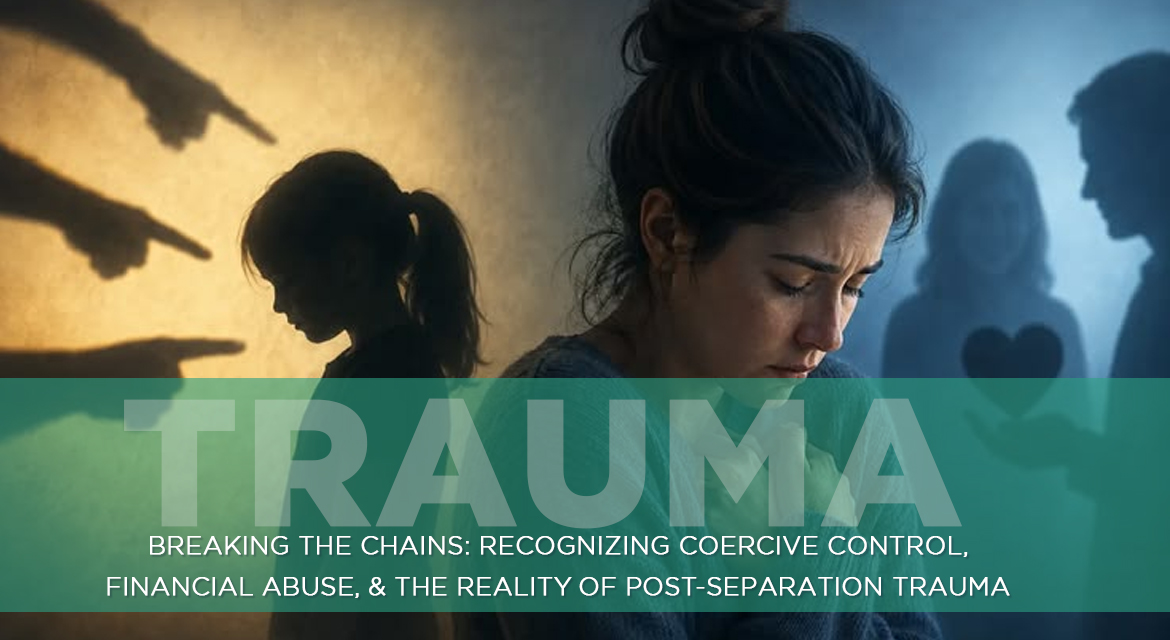
Breaking the Chains: Recognizing Coercive Control, Financial Abuse, and the Reality of Post-Separation Trauma
When we think of abuse, physical acts often come to mind first. However, some of the most damaging and invisible forms of abuse operate quietly beneath the surface. For individuals navigating complex relational dynamics, psychological manipulation can completely erode a person’s sense of self, safety, and autonomy. Understanding these hidden patterns is the vital first step toward breaking free and reclaiming your life.
- Demystifying Narcissistic Abuse and Emotional Abuse
At the root of many toxic relationship dynamics is narcissistic abuse coupled with chronic emotional abuse. Unlike isolated arguments, emotional abuse is a systematic pattern of behavior designed to undermine a partner’s self-esteem and reality.
Narcissistic abuse often begins with idealization (“love-bombing”) before shifting into devaluation and gaslighting—a manipulative tactic where the abuser makes the victim doubt their own perception, memory, or sanity. Victims are frequently left second-guessing themselves, walking on eggshells, and absorbing blame for conflicts they did not cause. Recognizing these patterns is essential because emotional abuse leaves invisible scars that can take deep roots if left unaddressed.
- The Invisible Cage: Coercive Control and Marital Abuse
Within many distressed relationships, coercive control acts as an invisible cage. This is a purposeful pattern of intimidation, degradation, isolation, and control that strips away an individual’s liberty and independence.
Unlike overt marital abuse, coercive control weaves itself into the fabric of daily life. An abuser might isolate their partner from friends and family, monitor their communications, dictate what they wear, or micro-manage their routine. Over time, the victim’s world shrinks, making it immensely difficult to seek help or maintain a sense of independent identity.
- Financial Abuse: Locking Down Independence
Another deeply insidious tactic is financial abuse, which targets a person’s economic security to trap them in the relationship. Financial abusers often:
- Restrict access to joint bank accounts or give an inadequate “allowance.”
- Sabotage employment opportunities or prevent their partner from working or attending school.
- Run up secret debt in their partner’s name or ruin their credit score.
By controlling financial resources, the abuser ensures that the victim lacks the economic means to leave, creating a profound barrier to independence and safety.
- Understanding Trauma Bonding
Why do individuals stay in or return to destructive relationships? The answer often lies in a psychological phenomenon known as a trauma bond.
Trauma bonding occurs through a cyclical pattern of abuse, tension-building, explosive incidents, and intense reconciliation or “honeymoon” phases. This roller coaster releases powerful neurochemicals in the brain, creating an addictive cycle of emotional highs and lows. Victims often feel a powerful, conflicting loyalty to the person hurting them, confusing survival mechanisms and deep emotional pain with love. Unraveling a trauma bond requires immense patience, validation, and specialized therapeutic support.
- The Danger Doesn’t End Here: Post-Separation Abuse
A common misconception is that leaving an abusive relationship marks the immediate end of the ordeal. In reality, post-separation abuse is a frequent and dangerous phase.
When an abuser loses direct day-to-day control, they may escalate tactics through the legal system, weaponize child visitation arrangements, harass the survivor digitally, or spread malicious narratives to mutual contacts. Post-separation abuse proves that healing requires ongoing protection, boundaries, and a robust support network even after physical distance has been established.
Moving Forward: Your Path to Healing
Breaking free from the chains of narcissistic abuse, coercive control, and post-separation trauma is an act of profound courage. You do not have to navigate the complex layers of emotional recovery and trauma bonding alone.
If these dynamics sound familiar and you are ready to reclaim your autonomy, professional support can make all the difference. Horizon Healing Psychotherapy offers a safe, compassionate, and confidential space to unpack your experiences. Take the first step today by booking your Free 20-Minute Consultation and begin your journey toward lasting peace and recovery.
- Psychotherapy sessions are virtual( meet from the comfort of your home)
- Timings: 10 am-3:30 pm. Evenings are available from 6pm to 10pm with a time/day consultation.
- some weekends available on request.


Useful Links
NewsLetter
Feel Free to reach out if you want to collaborate with us, or simply have a chat.

